Most TikTok Ads accounts do not have a scaling problem. They have a learning problem. When teams increase spend before they know why one creative beats another, the extra budget amplifies noise instead of producing a repeatable acquisition system.
A sound TikTok Ads creative testing process answers one commercial question at a time. Which opening earns attention? Which presenter makes the message credible? Which proof reduces doubt? Which offer creates qualified action? This guide turns those questions into a practical testing framework you can use before increasing campaign spend.
What creative testing should actually achieve
Creative testing is not a contest to find one lucky video. Its purpose is to identify a reusable reason for performance. A winning hook can inform the next ten scripts. A convincing product demonstration can become a recurring format. A strong objection-handling angle can improve both paid ads and organic content.
TikTok Ads Manager includes a split-testing tool that can compare two versions while keeping other variables controlled. TikTok says the tool separates audiences so each group sees only one version, helping advertisers make a cleaner comparison. Its current testing variables include creative assets, creative, targeting, placement, budget strategy, bidding and optimisation, catalogues and custom tests.
The key principle is simple: test a hypothesis, not a pile of unrelated edits.
Pass the pre-test gate first
A creative test cannot rescue a broken measurement setup, a confusing landing page or an offer nobody wants. Before producing variants, confirm four foundations.
- One campaign objective: optimise for the business action you actually value, not the easiest metric to collect.
- Reliable tracking: verify that the relevant conversion events fire correctly and that the destination page works on mobile.
- One defined audience: know who the message is for and what problem, desire or objection the creative addresses.
- One clear offer: decide what the viewer gets, why it matters and what action follows the click.
If any of these are uncertain, fix them before judging the creative. Otherwise, a video may be blamed for a failure caused further down the journey.
Build a hypothesis before a variant
Write each hypothesis in a form that can be proved or rejected:
If we change [one creative element] for [one audience], then [one key outcome] should improve because [reason].
For example: “If the opening names the buyer’s operational problem instead of introducing the product, more qualified viewers will continue watching because the relevance is immediate.” That hypothesis tells the team what to change, what to observe and what the result would teach them.
“Make three different videos and see what wins” is not a useful hypothesis. If every video has a different presenter, script, offer, pace and call to action, you cannot identify the cause of the result.
The five-layer TikTok Ads creative testing framework
Work through these layers in order. Earlier layers determine whether viewers stay long enough to encounter the later ones.
1. Test the hook
The hook is the opening idea, visual or line that earns the next moment of attention. TikTok’s current creative guidance recommends making the proposition clear early, structuring content around a hook, key selling points and a clear call to action, and designing in a platform-native vertical format.
Create hooks from meaningfully different angles rather than rewriting the same sentence:
- Problem: “Your sales team is losing warm leads after the first reply.”
- Outcome: “Here is how to turn one campaign brief into five usable ad concepts.”
- Contrarian belief: “More ad variations will not fix a weak testing plan.”
- Demonstration: show the product, workflow or before-and-after process immediately.
Keep the body, offer, presenter and destination constant while comparing the hooks. A winning opening should then be tested with new bodies, not treated as a permanent answer.
2. Test the messenger and delivery
The same script can feel different when delivered by a founder, employee, customer-style creator, subject expert or voiceover. The right messenger depends on what the buyer needs to believe. A complex B2B service may benefit from authority and clarity. A consumer product may need demonstration and relatability.
Compare presenters using the same core script and visual sequence. Then inspect not only attention signals, but also the quality of downstream actions. A charismatic presenter who attracts broad curiosity may produce weaker commercial intent than a less polished expert who speaks directly to the buyer’s problem.
3. Test the proof mechanism
Claims are cheap. Proof is the part of the creative that gives a viewer a reason to believe. Useful proof can include a live demonstration, a screen recording, a process breakdown, a product comparison, a transparent walkthrough or a specific explanation of how the service works.
Do not invent customer results or imply evidence you do not possess. If no substantiated case study is available, demonstrate the process. For a software product, show the workflow. For a professional service, explain the diagnostic steps and the decision criteria. Specificity is more credible than hype.
4. Test the offer
An offer is more than a discount. It defines the next exchange of value. A consultation, audit, demo, trial, guide or direct purchase can each suit a different level of buyer readiness.
Keep the creative concept stable while comparing offers. Judge the result on the quality and economics of the resulting action, not simply click volume. If a low-friction guide generates many irrelevant contacts, it may be worse than a higher-friction consultation that attracts fewer but better-fit prospects.
5. Test the call to action
The call to action should remove ambiguity. “Learn more” may fit an educational landing page, while “Book a strategy call” is clearer when the next step is a conversation. Match the spoken line, on-screen text, button and destination so the viewer encounters one coherent instruction.
A call-to-action test is useful only after the core concept and offer are credible. Changing button language will not repair a message that failed to earn attention or trust.
How to structure a clean split test
- Choose one business question and write the hypothesis.
- Create two variants with one obvious difference.
- Keep the objective, audience, offer, landing page and measurement method constant.
- Select the key metric before the campaign starts.
- Use TikTok Ads Manager’s estimated testing power and duration guidance rather than choosing an arbitrary budget or stopping point.
- Avoid editing the test after launch because changes can damage the comparison.
- Record the result, the confidence of the conclusion and the next question.
TikTok currently recommends allowing at least seven days for a split test, using an audience large enough to avoid an inadequate sample and avoiding changes once the test starts. The platform can also return “no winning ad group found.” That is a valid result, not a failure. It means the evidence did not justify choosing a winner under the test conditions.
Read the funnel, not one vanity metric
A creative can win one stage and lose the next. Evaluate signals in sequence.
- Attention: did the opening stop enough of the intended audience to earn meaningful viewing?
- Retention: did viewers stay through the argument, demonstration or proof?
- Intent: did the creative produce clicks or destination visits from people who understood the offer?
- Action: did those visitors complete the conversion event that matters?
- Quality: did leads, appointments or purchases meet the business definition of value?
If attention is weak, revisit the hook. If retention is healthy but clicks are weak, examine the proposition and call to action. If clicks are strong but conversions are poor, inspect message match, landing-page friction and offer quality before blaming the ad.
A three-round example
Imagine a B2B software company promoting a demo. Round one compares a problem-led hook against a workflow demonstration, with the remaining script held constant. The demonstration wins on qualified demo requests.
Round two keeps the demonstration hook and compares a founder presentation against a concise screen-recorded voiceover. The voiceover retains more of the right viewers and produces comparable lead quality, so the team chooses it as the more repeatable format.
Round three keeps the winning hook and format, then compares a generic demo invitation with an offer to review the prospect’s current workflow during the demo. The result tells the team whether a more specific next step improves commercial intent.
Each round produces a learning that survives beyond one ad. That is the difference between random variation and a creative system.
Common testing mistakes
- Changing several variables: the result cannot explain what caused the difference.
- Testing minor cosmetic edits: two nearly identical variants may not create a meaningful learning.
- Stopping after an early fluctuation: short-term movement is not the same as a reliable conclusion.
- Optimising for cheap attention: entertainment without message relevance can attract the wrong audience.
- Ignoring the destination: weak message match between the ad and landing page wastes qualified interest.
- Declaring one permanent winner: audiences, offers and creative conditions change, so learning must continue.
When to scale, iterate or stop
Scale when the variant wins on the metric tied to the commercial objective, lead or purchase quality remains acceptable, tracking is sound and the result is reliable enough to support the decision.
Iterate when one stage improves but another weakens. A hook may lift attention while reducing buyer relevance. Keep the useful element, then repair the stage that failed.
Stop when neither variant produces a useful signal, the offer lacks demand, measurement is unreliable or the economics fail even after the creative does its job. More spend is not a strategy.
Turn testing into an operating system
Maintain a simple creative learning log containing the hypothesis, variable, audience, offer, key metric, result and next test. Group successful elements by hook, messenger, proof, format, offer and call to action. Over time, this becomes a practical brief for your production team rather than a folder of disconnected videos.
If your team needs help building that system, Digital Consulting Pros can connect TikTok Ads campaign management with content generation and social media management. The goal is not simply to launch more creative. It is to produce clearer evidence, faster learning and better-informed investment decisions.
Primary sources
- TikTok Ads Manager: About Split Testing, updated January 2026.
- TikTok Ads Manager: Split Testing Variables, updated January 2026.
- TikTok Ads Manager: Split Test Best Practices, updated January 2026.
- TikTok Ads Manager: Creative Best Practices for Performance Ads, updated June 2025.
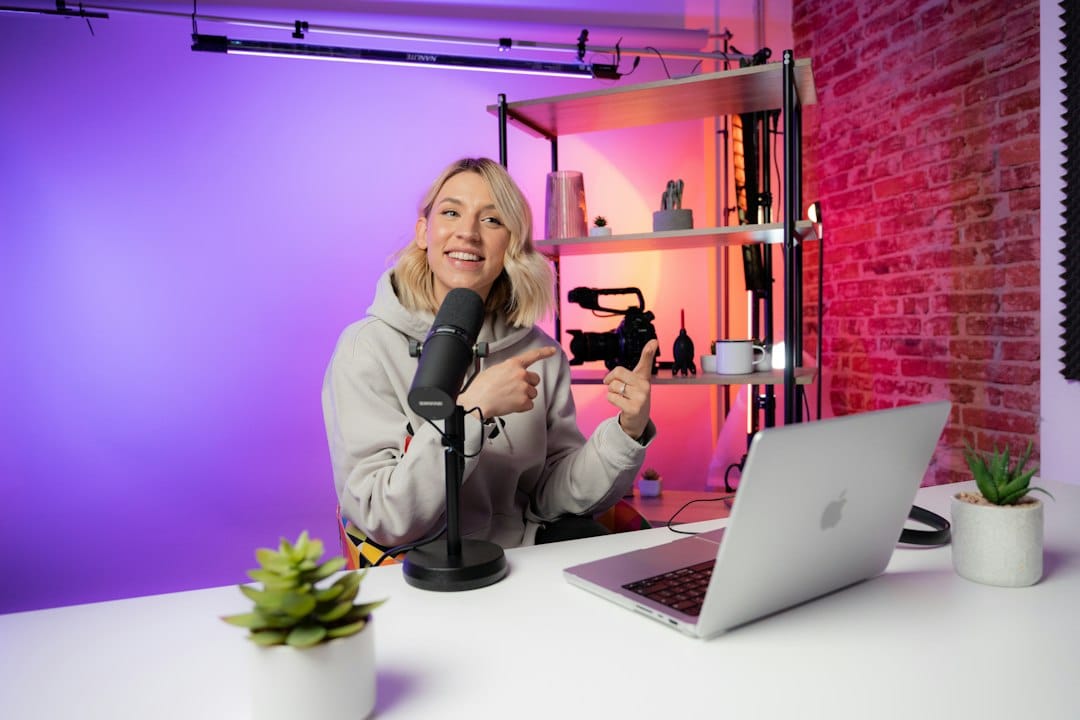
Featured photo by Videodeck .co on Unsplash.