
Why Quality Matters For Malta Advertisers
Google Ads spend can climb without producing more qualified leads or sales. For Malta business owners and marketing managers, the first step is to find where the gap occurs: the search that triggers an ad, the message in the ad, or the page a visitor reaches.
Quality Score can help diagnose that experience. Google reports it at the keyword level and uses it to flag potential issues with expected clickthrough rate, ad relevance, and landing page experience. It is a diagnostic, not a guaranteed cost-cutting switch or a measure of business success. Google also says the score itself is not an input in the ad auction, so raising the number alone is not a sound campaign goal. Google’s Quality Score guidance explains how to use it to identify areas for review.
The practical response is to check whether keywords reflect buyer intent, whether ad copy answers that intent, and whether the landing page delivers what the ad promises. Digital Consulting Pros’ work spans Google Ads, landing-page development, and conversion-focused marketing, so these parts of the customer journey can be assessed together rather than in isolation.
Google says better ad quality is generally associated with stronger performance, including potentially better ad positions and lower costs, but the effect depends on the search context and is not guaranteed. Google’s explanation of ad quality makes clear why businesses should treat Quality Score as a signal, then judge changes by qualified leads, sales, and acquisition costs. The sections that follow focus on practical checks, not chasing a score for its own sake.
Use Quality Score As A Diagnostic

The visible Google Ads Quality Score is a keyword-level rating from 1 to 10. It indicates how an ad and its landing page compare with other advertisers when people search for that keyword. Treat it as a clue about the experience you provide, not a grade for the whole account.
Google says Quality Score is neither a campaign KPI nor an input in the ad auction. Raising the number by itself is not a bidding tactic or a reliable route to more sales. Its purpose is to help identify where an ad experience may need attention, such as relevance or the landing page. See Google’s guidance on Quality Score.
A high score does not show whether your campaign is profitable. Check conversions, cost per acquisition, lead quality and revenue against your business targets. A low score alone does not mean a keyword should be paused either. If it brings in qualified leads at an acceptable cost, investigate the underlying experience before removing it.
Results can vary by search context, and a particular Quality Score does not promise a particular CPC or cost reduction; bids alone also do not improve Google’s assessment of ad quality. Google’s explanation of ad quality makes the distinction clear.
For Malta advertisers, use the score to decide what to inspect, then judge changes by their effect on qualified enquiries and revenue. Digital Consulting Pros’ ROI-focused approach pairs campaign diagnostics with business measures, so a stronger score is useful only when it supports better commercial results.
Find The Weakest Of Three Components

A component rating helps show where a search ad experience may be falling short. In Google Ads, the three reported components are expected clickthrough rate (CTR), ad relevance and landing-page experience. Google defines them as estimates of click likelihood, the fit between an ad and a search, and the usefulness of the page a visitor reaches.
Expected CTR estimates how likely an ad is to be clicked when it appears for a search. Ad relevance reflects how closely the ad message matches its keywords and the searcher’s intent. Landing-page experience considers whether the destination is relevant and useful after the click. Google assigns each component an Above average, Average or Below average status by comparing it with advertisers whose ads appeared for the exact same search during the previous 90 days. Google’s component guidance explains these ratings.
Treat an Average or Below average label as a reason to investigate that part of the journey, not as a promise that changing it will reduce cost per click by a set amount. A Below average CTR rating may call for reviewing the search terms and ad message. A weak relevance rating may point to a mismatch between keywords and copy. A weaker landing-page rating is a prompt to check whether the page answers the searcher’s need and makes the next step clear.
Digital Consulting Pros brings a decade of hands-on digital marketing experience to this review, including paid search and website design and development. Its Google Ads account structure guidance covers organizing campaigns and addressing landing-page issues, so teams can connect a component warning to a practical area of work rather than chase the number alone.
The ratings do not capture every condition that can shape ad quality. Google notes that device, user location, time of day and ad assets may not be reflected in Quality Score. Consider these factors when a rating seems inconsistent with campaign results, and compare the diagnostic with qualified leads, sales and acquisition costs before deciding what to change. Google’s overview of ad quality explains these factors.
Match Keywords To Ads And Intent
A focused ad group gives each ad a clearer job: answer the need behind a closely related set of searches. For a Malta business, choose keywords that reflect the products or services it actually sells and the intent of likely customers, rather than selecting terms for search volume alone. Google recommends grouping similar keywords and tailoring ads to each theme to improve the match between search, keyword and message (Google’s guidance on improving Quality Score).
For example, a company offering business website design should keep those searches distinct from terms about social media management if the services and customer needs differ. An ad for each group can then name the relevant service, explain a specific benefit and make a clear offer. Generic copy that could apply to any search gives people less reason to see the ad as relevant.
Test variations in headlines and descriptions, including distinctive benefits and calls to action such as “get a quote” or “sign up.” Keep the promise consistent: someone invited to request a quote should land on a page that explains the service and makes it easy to enquire. Digital Consulting Pros applies this same practical alignment across its advertising and landing-page work, rather than treating the ad as separate from the page that follows.
Google notes that changing an ad group’s location within a campaign or account, while keeping the same ads and keywords, does not itself change ad quality. Moving a keyword into an ad group with different ad text can change the experience because the message shown to the searcher may be different. That makes ad-group decisions worth checking against the intent each ad is meant to serve (Google Ads’ explanation of ad quality).
Make The Landing Page Keep Its Promise
The landing page is the next part of the conversation that began with a search and an ad. If someone clicks an ad for a specific service or offer, the page should make that information easy to find rather than sending them to a general page that leaves them searching. Google describes landing-page experience in terms of how relevant and useful the page is to people who click an ad, so a close match helps the visitor continue with confidence (see Google’s guidance on ad quality).
Review the page as a first-time visitor. Is the information organised, easy to navigate, and clear about what to do next? Make the main action visible, whether it is requesting a quote, calling the business, or making a purchase. Include suitable contact details and explain the service or offer plainly. Digital Consulting Pros’ work spans website development and lead generation, so these checks can connect an advertising visit to a clear route toward a qualified enquiry.
Check the page on mobile as well as desktop. Slow loading, intrusive pop-ups, cramped text, or hard-to-use buttons can frustrate visitors and prompt them to leave. For a lead-generation campaign, make the service details and enquiry step easy to understand. For an online shop, keep the advertised product information and shopping basket easy to find. These are practical usability checks, not a claim that any single page feature determines Quality Score.
Review the destination before launch and after substantial changes to the offer, page, or campaign. A useful starting point is this guide to Google Ads account structure, which discusses landing pages when diagnosing low scores. Match each important search theme to a suitable destination instead of relying on the homepage by default.
Review Scores In Google Ads
Once you have a specific issue to investigate, use the keyword table to check the current component ratings. In Google Ads, open Campaigns, then Keywords. Select the table’s columns icon and add Quality Score, Landing Page Exp., Exp. CTR, and Ad Relevance from the Quality score section. Google’s instructions for viewing Quality Score give the same route.
For context over time, add the historical columns: Quality Score (hist.), Landing Page Exper. (hist.), Ad Relevance (hist.), and Exp. CTR (hist.). Segmenting the table by day can help pinpoint when a rating changed and whether it coincided with an ad or landing-page update. Digital Consulting Pros’ ROI-focused approach also considers whether changes bring in qualified leads, rather than treating the score as a result in itself.
A dash in the Quality Score column does not mean a keyword is poor. It means Google has insufficient search activity that exactly matches the keyword to calculate a score. Google bases the score on historical impressions for exact searches, so changing a keyword’s match type does not directly change its calculation.
A broad-match keyword may still show a score if a corresponding exact-match keyword in the same ad group had impressions during the previous 90 days. In that case, the broad-match term may display the exact-match keyword’s score, so check the underlying data before drawing conclusions.
If a keyword has no score, Keyword Planner can help identify relevant terms, and broader matching can increase participation in auctions and the chance of gathering enough exact-search data. Neither action directly improves Quality Score; use them to collect information, then assess the keyword’s relevance and business results.
Control Waste Beyond The Score
A stronger Quality Score cannot prevent every wasted click. Review search-term reports regularly and add negative keywords when queries are unrelated to your offer. This keeps budget focused on searches that fit your products or services, rather than paying for traffic that is unlikely to become a customer.
Track meaningful actions such as purchases, lead-form submissions and phone calls. Digital Consulting Pros supports businesses with Google Ads and lead-generation services, so campaign decisions can be tied to the actions that matter commercially, not click volume alone. Reported conversions do not affect Google’s assessment of ad quality, but accurate conversion tracking helps you judge campaign results and acquisition costs. Google explains that ad quality and reported conversions are separate considerations in its ad quality guidance.
Do not raise bids in an attempt to improve Quality Score. Bids can affect Ad Rank, but they do not change Google’s assessment of ad quality. Google also notes that, for a low-quality ad, actual cost per click can approach the maximum CPC even when competition is low. With manual bidding, a click will not cost more than the maximum CPC; automated bidding is an exception to that limit. These distinctions are useful when setting expectations and reviewing bid changes.
Judge performance against your business economics. A cheaper click is not necessarily a better click if it brings few qualified enquiries or sales. Consider margins, revenue and customer acquisition cost alongside conversion volume before shifting budget. Digital Consulting Pros also provides account-structure guidance to help SMEs organise campaigns around spend efficiency; its Google Ads account structure guide offers a related starting point.
Turn Findings Into A Measured Test
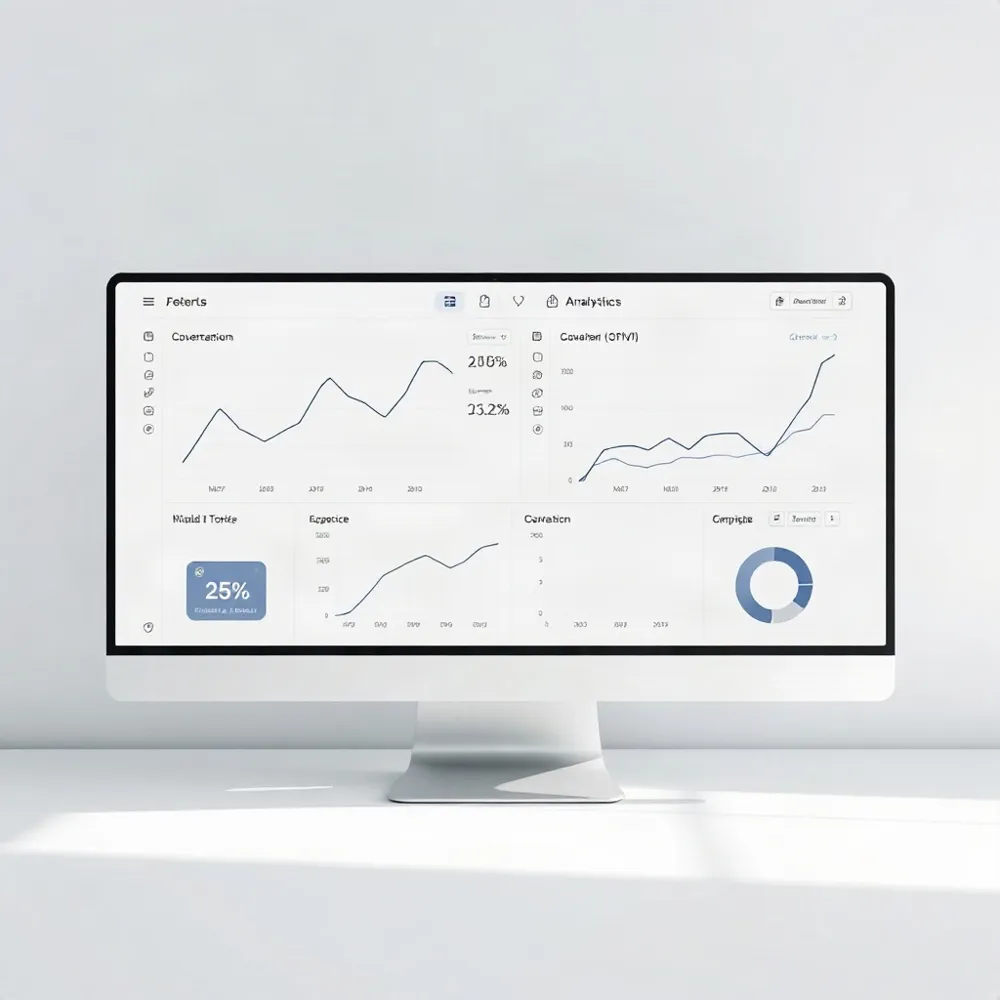
Treat an account change as a test, not a promise of savings. Choose a keyword or ad group with a weak component and meaningful spend or business value, then make one focused adjustment: refine the keyword, revise the ad copy, or improve the destination page. Changing one main factor at a time makes it easier to see what may have affected performance.
Before the change, record the component status and Quality Score alongside impressions, click-through rate (CTR), conversions, conversion rate, and cost per acquisition (CPA). Add revenue or return on ad spend (ROAS) where tracking supports it. Compare the same measures over a consistent reporting period, and account for other changes that could affect results, such as budgets or seasonal demand. Google’s Quality Score guidance describes the score as a diagnostic, not a standalone measure of campaign success.
CTR alone can give a misleading result. A revised ad might attract more clicks but fewer qualified enquiries, so judge the test by whether visitors complete commercially useful actions and what those actions cost. Digital Consulting Pros’ ROI-focused approach considers leads and sales, rather than treating click volume as the outcome.
Quality varies with search context, and neither outcome is guaranteed; see Google’s ad quality guidance. Do not set a fixed savings target based on a score change. Keep a low-scoring term if it still brings satisfactory conversions or revenue, and prioritise the work most likely to matter to the business.
Improve The Experience, Measure The Return
Use Quality Score to spot possible relevance or landing-page problems, then improve the experience behind the rating. A higher score or single change does not guarantee savings. Google’s guidance on ad quality treats the visible score as a diagnostic, not a measure of campaign success.
For your next review, inspect keyword-level component statuses in Google Ads, address the weakest meaningful issue, and track what happens to qualified leads, sales and acquisition costs. Digital Consulting Pros brings this assessment back to campaign goals and revenue, rather than treating a score increase as the result.