
Start With the Campaign Problem
If you run a small or midsize business, startup, or B2B team, the first question is not which AI tool to buy. Ask where a campaign is losing time or value: are too few leads a good fit, does creative production delay launch, or do enquiries fail to turn into sales conversations? A clear problem gives you a practical way to judge whether AI is useful.
Treat AI as support for specific work across planning, production, execution, and measurement. It can help draft a brief, shape content, organize audience information, or prepare performance reports. The output still needs a marketer who understands the business, checks the facts, and decides what to do. A generated plan or a faster workflow is not proof that a campaign will earn more.
That distinction matters for businesses in Malta as much as elsewhere. The available guidance offers practical workflows, not Malta-specific performance benchmarks. Digital Consulting Pros works with SMEs and B2B firms on lead generation, advertising, website conversion, and campaign strategy, so a useful starting point is to identify which of those activities is holding back qualified opportunities.
Before testing a tool, record how the current process performs. Depending on the bottleneck, track lead quality, time spent preparing assets, enquiry-to-meeting progression, or campaign cost per qualified lead. Then choose one limited task, provide relevant business and audience context, and compare the AI-assisted process with that baseline. This makes it easier to separate a real improvement from a polished demonstration.
Keep people responsible for the decisions that affect customers and budgets. Review AI-generated messages for accuracy and brand fit, confirm that audience assumptions match your own data, and make sure someone owns the next step when a prospect responds. Digital Consulting Pros combines AI-driven lead-generation tools with buyer-persona-based marketing and human review, helping businesses connect automation to a defined sales objective rather than adding technology without a clear purpose.
The guiding principle is straightforward: define the business problem, supply context the tool would not otherwise know, and measure the result against a baseline. When the pilot improves a meaningful campaign outcome without weakening quality or control, you have a reason to consider expanding it.
Choose a Bottleneck Worth Solving

Buying software before defining the campaign problem can add cost without improving results. Start with a recurring task that slows the team or limits performance, such as producing creative, assembling reports, following up with leads, or testing ad variations. The aim is to improve a specific part of the workflow, not to add AI for its own sake.
Digital Consulting Pros works across lead generation, advertising, content, and website conversion, so a pilot can focus on the point where a client’s campaign is losing time or qualified opportunities. For a B2B team, that might mean examining manual prospecting and follow-up; for an advertiser, it could mean reviewing how long it takes to develop and assess creative options.
Put a value on the problem
Before comparing tools, estimate what the bottleneck costs. Record staff time spent on the task, any direct production or service expense, and the business impact of delays or missed follow-ups. Use existing campaign and sales records where possible. If the team cannot connect the problem to a meaningful cost or outcome, it may not be the right first pilot.
Choose a pilot with plausible business value and manageable risk. A limited reporting workflow or a first draft of ad copy is easier to review than an automated process that sends messages to every prospect. Digital Consulting Pros’ ROI-focused approach is to ground the choice in the client’s campaign data and buyer profile, rather than assuming that a tool’s features will translate into more sales.
Set the test before choosing software
Write down the current baseline, the result you want, the evaluation period, and the minimum improvement that would justify continuing. Match the measure to the bottleneck: production time for creative work, reporting hours for analysis, qualified leads for prospecting, or conversion rate and cost per acquisition for performance campaigns. The AI advertising implementation guidance also recommends defining an objective and KPIs, then testing under real campaign conditions before scaling.
Keep the comparison fair. Use the same brief, audience, and review standards for the existing process and the AI-assisted version when practical. Track quality as well as speed: a faster draft is not a win if it needs extensive correction or attracts poorly matched leads. If campaign volume is low, note that results may be inconclusive rather than treating a small fluctuation as proof.
Keep the first test contained
Pilot one use case with a limited workflow or dataset, and avoid introducing several tools at once. That makes it easier to identify what caused any change and reduces disruption for staff. Digital Consulting Pros can support a focused test by combining its AI-driven lead generation services with human review of targeting and outreach, rather than handing the entire customer journey to automation.
Finally, compare the measured benefit with subscription, setup, integration, and training costs. Continue only if the pilot meets its success threshold and fits the team’s process. A tool may be useful, but adoption alone does not show that it pays for itself.
Give Planning Tools Business Context
Once you have chosen a bottleneck, an AI planning tool can help organise the work around it. It can summarise research, sketch a campaign structure, suggest strategic options and propose objectives or measures. Treat that response as a working draft, not a validated plan: the tool does not automatically know your constraints, customers or commercial priorities.
The quality of the draft depends on the context you provide. Describe what the business sells and how it makes money, the campaign goal and budget, the intended audience and buyer profiles, and the relevant market and location. Add the funnel stage, sales-cycle length, available staff and skills, positioning, and brand tone. These details give the system a basis for making recommendations that fit the actual campaign rather than producing a generic list of marketing activities.
Ground the plan in evidence the business already has: current analytics, sales results, customer behaviour, competitor activity and market research. If the tool supports it, provide approved background documents, such as past campaign briefs, brand guidelines and product information, or set custom instructions for the team’s audience and voice. A general-purpose assistant may not have access to private company data, so recommendations based on a prompt alone can miss important context.
Digital Consulting Pros applies buyer-persona thinking across its digital marketing work, including lead generation and advertising. For an in-house team, the same discipline means giving a planning tool useful customer evidence rather than asking it to guess who is most likely to buy.
Build the plan in stages
Use a deliberate planning sequence: review the situation, set objectives, develop the strategy, choose tactics and plan implementation. Ask the tool to work through these stages in order. This makes it easier to spot a leap from a broad business problem to a channel recommendation without explaining why that channel fits the audience or objective.
AI can suggest possible objectives, but it may not know whether a target is realistic for your performance history, conversion model or available budget. It may also return a channel list without prioritising it, combine tactics that do not form a coherent strategy, or fail to identify which audience segment and positioning best suit the business. Check recommendations against your own results and make the prioritisation decisions yourself.
For Digital Consulting Pros, that distinction matters in campaigns intended to create qualified sales opportunities, not simply activity across more channels. The agency’s ROI-focused services include advertising, SEO, email marketing and AI-driven lead generation; the campaign objective should determine which of these activities belongs in the plan.
Refine the first answer
Keep the conversation going after the initial draft. Ask for alternative approaches for different buyer profiles or funnel stages, request a version aimed at leads rather than awareness, and compare the trade-offs. You can also ask what assumptions the plan makes, which evidence supports each recommendation and what information is still missing. Then revise individual sections instead of regenerating everything or accepting the first answer as final.
This process is useful for testing options, but it does not replace market research. A model’s stored knowledge may be months or years out of date. Even when a tool can retrieve current information, that access alone does not show that a claim is accurate, representative or relevant to your market. Verify market conditions, competitor claims, platform features and other time-sensitive details against reliable current sources before they shape a budget or campaign decision.
Before approving the plan, check that each objective has a measure, each tactic supports the chosen strategy, and the proposed work fits the team’s resources. Compare assumptions with analytics and sales evidence, then assign people to the steps that require judgement or customer knowledge. The resulting plan should guide a testable campaign, not create confidence simply because it is detailed.
Select Tools by Campaign Task
Once the campaign problem is clear, compare tools by the job they need to do, not by popularity or the length of a feature list. A writing assistant may help with a first draft, but it will not necessarily manage an email journey, analyse search performance or connect a new lead to your sales process.
Match the tool to the work
For planning and writing, general-purpose assistants such as ChatGPT, Claude and Gemini can help organise research or draft copy from a clear brief. Design teams may prefer Canva for templates and visual production, while specialist SEO platforms such as Semrush or Surfer SEO focus on keyword and content analysis. These are examples of different functions, not endorsements or evidence that any one product will improve results.
Other tasks call for different capabilities. An email platform such as ActiveCampaign can support behaviour-based journeys; a CRM keeps prospect records and interactions together; and workflow tools such as Zapier or Gumloop can pass information between applications. Digital Consulting Pros also offers AI-driven lead-generation services, including the DCP Lead Generator™, alongside B2B appointment setting and database reactivation. That combination is relevant when the bottleneck is prospecting and follow-up, rather than content production alone.
Compare fit, not feature counts
General-purpose tools are flexible, but specialist products may provide channel-specific templates or workflows that require less setup for a particular task. Compare how each option handles your audience and brand voice, what data it can access, and whether it connects with the systems your team already uses. Also check ease of use, learning curve, collaboration features, privacy terms, user or usage limits, and total cost, including setup and staff time.
A tool that produces polished copy but cannot fit into your approval process may create extra work. Likewise, overlapping subscriptions can leave your team switching between platforms and manually reconciling campaign data. Digital Consulting Pros’ work spans web development, advertising, email, content and lead generation, so tool recommendations can be considered in relation to the wider campaign and the client’s existing systems.
Test with the same brief
If two products appear suitable, give each the same task, audience information, brand guidance and success criteria. Compare the resulting quality, revision effort, workflow fit and cost, rather than judging a tool from a demonstration. Features and prices change, so verify current terms before budgeting. A listing in a roundup or a vendor’s own page describes available features, not proof that the product is best for your business or will improve campaign performance.
Choose the smallest combination that addresses the bottleneck and works with your current setup. Add another tool only when a real gap remains, such as a missing integration or a task the existing platform cannot handle. This keeps spending and duplicated work in check while making it easier to see whether the chosen tools contribute to the campaign objective.
Build Campaign Assets With Review
AI can produce a useful first draft of an advertisement, social post, email, article, video script or product description. Treat that draft as working material, not finished copy. A detailed brief that states the audience, campaign goal, offer, channel and tone gives the tool a clearer job. Add approved examples and brand guidance where possible, then review the result against the real campaign.
For small and midsize businesses, this can make it easier to prepare a range of campaign assets without asking a tool to invent the strategy. Digital Consulting Pros pairs content creation with buyer-persona-led marketing, giving creative work a defined audience and purpose. The agency’s examples of AI marketing campaigns also show how AI-generated ideas can be used as creative starting points rather than instructions to publish without review.
Adapt assets to the campaign
Creative tools can help generate image concepts, make versions for different formats, and repurpose a blog post into social or email content. They may also help teams work with existing footage when a campaign needs a different cut, language or objective. For example, a brand-awareness video might be edited to give product features and a purchase prompt more prominence for a sales-focused campaign. These are possible production approaches, not a recommendation to use any one platform.
When adapting content for another market, have a fluent reviewer check the language, idiom and cultural references. Confirm that the revised creative still fits the brand and that the message suits the local offer and audience. A direct translation or automated edit may preserve the words while missing the intended meaning.
Create options, then choose carefully
If time and budget allow, generate several copy or creative variations for a controlled comparison. Change a meaningful element, such as the opening line, image or call to action, and keep the audience and campaign objective clear. More versions create opportunities to test different approaches, but they do not guarantee better results. Decide which variation to use based on your campaign data, not on the tool’s prediction or the number of drafts it produced.
Review before anything goes live
Set a human approval step before publishing or sending. Check factual claims, prices, offer terms, spelling and tone, and compare the visuals with approved brand materials. Confirm that text is readable, images include suitable alternative text where needed, and each asset meets the destination platform’s specifications. Check that the business has permission to use any supplied or generated material, including images, music, footage and customer content.
A simple review checklist helps prevent small errors from reaching customers. Assign a named person to approve the final asset and record any required changes. Digital Consulting Pros’ content creation and campaign services can support production, while the business retains control of its claims, brand standards and final sign-off.
Connect Audience Signals to Outreach
Lead-generation automation works best when your team first defines who it wants to reach and what makes a prospect qualified. An AI system can research prospects, enrich contact records, group audiences, assign scores and tailor messages, but your business still needs to set the ideal customer profile and qualification rules.
For small and midsize businesses and B2B teams, DCP Lead Generator™ supports prospecting and nurturing based on your buyer persona rules. The useful test is whether a workflow helps your team identify and follow up with suitable prospects, not simply whether it automates more activity.
Map the path from response to follow-up
A connected campaign process can begin when a person submits a form, replies to an email or starts a website chat. The system can check and enrich relevant contact details, apply your segmentation or scoring criteria, send a follow-up email or assign a task, route promising prospects to sales and record the activity in your CRM.
Keep the rules tied to your own buyer profile. A pricing-page visit or repeated email engagement might be useful signals, but neither should automatically qualify someone for every business. Compare those behaviours with your conversion history, then adjust the criteria when high-scoring leads fail to progress or qualified prospects are overlooked. Regularly audit your scoring criteria against conversion data to check whether they identify sales-accepted leads effectively.
Before automating the handoff, check that records are accurate and the fields used by connected systems match. If a campaign tool sends a lead status or source into the wrong CRM field, marketing and sales may see conflicting information. Digital Consulting Pros combines lead-generation services with appointment setting and database reactivation, keeping prospecting and follow-up connected to the goal of creating qualified sales opportunities.
Make outreach relevant and human
A CRM connection gives marketing and sales a shared record of contact details, campaign responses and lead status. Use that context to shape a message around a prospect’s likely need or recent action. Adding a person’s name to a generic email is not meaningful personalization, and automated follow-up should not replace a thoughtful conversation.
A website chatbot can answer routine questions, collect details, qualify a visitor or help book a meeting. Give it current, approved information such as service descriptions and frequently asked questions, and review conversations for accuracy and whether the visitor meets your qualification criteria. If someone raises a complex or sensitive issue, provide a clear route to a person rather than forcing the conversation through automation.
Measure the process by lead quality and movement toward sales, not just the number of messages sent. Track whether leads meet your qualification criteria, whether sales accepts the handoff and whether follow-up leads to a meaningful sales conversation. Keep human review in the loop, especially in B2B outreach, where timing, context and trust can matter as much as the initial response.
Automate Handoffs Without Losing Control
Automation connects campaign tools so information moves to the next person or system without repeated copying. For example, a form submission can trigger lead scoring and a tailored follow-up, add the contact to an email platform, alert the team and log the activity in a CRM.
The same approach can support work beyond lead capture. A completed creative asset can be sent to an approver, then saved to shared storage once it is approved. Campaign data can feed a recurring report, while a detected change to a competitor’s offer can create a task for a marketer to assess. These workflows reduce routine transfers, but they do not decide whether a message is suitable or a market change matters.
Map the workflow before switching it on
Write down what starts each workflow, what conditions it checks, who owns the next step and what should happen when something goes wrong. For a lead workflow, specify the fields required, the qualification criteria, the follow-up message and the person responsible for urgent or uncertain cases. Decide how the system should handle missing contact details, duplicate records, failed integrations and contacts who should not receive an automated message.
Start with a small group or test dataset. Check that records reach the right system, messages use the intended information, notifications go to the right people and activity is logged correctly. Defining relevant audience and qualification criteria before applying them in automated workflows helps ensure the automation targets the right contacts.
Keep people responsible for exceptions
Fixed-rule automation follows conditions set in advance, such as sending a notification when a form is submitted. Recommendations based on historical data can suggest a lead score or next action. Both need oversight: rules can be misconfigured, and automated recommendations can be wrong or based on incomplete data. Assign a person to review unusual scores, failed handoffs, inaccurate messages and leads that need a prompt human response.
Where practical, connect tools to project and marketing systems staff already use. Familiar workflows can make approvals and follow-up easier to manage, while unnecessary integrations add setup work and create more places for data to move. Before connecting a service, confirm which information it will receive and whether that access is needed. Expand automation only after the pilot shows that the handoff works reliably and saves effort without weakening control.
Measure Outcomes and Feed Learning Back
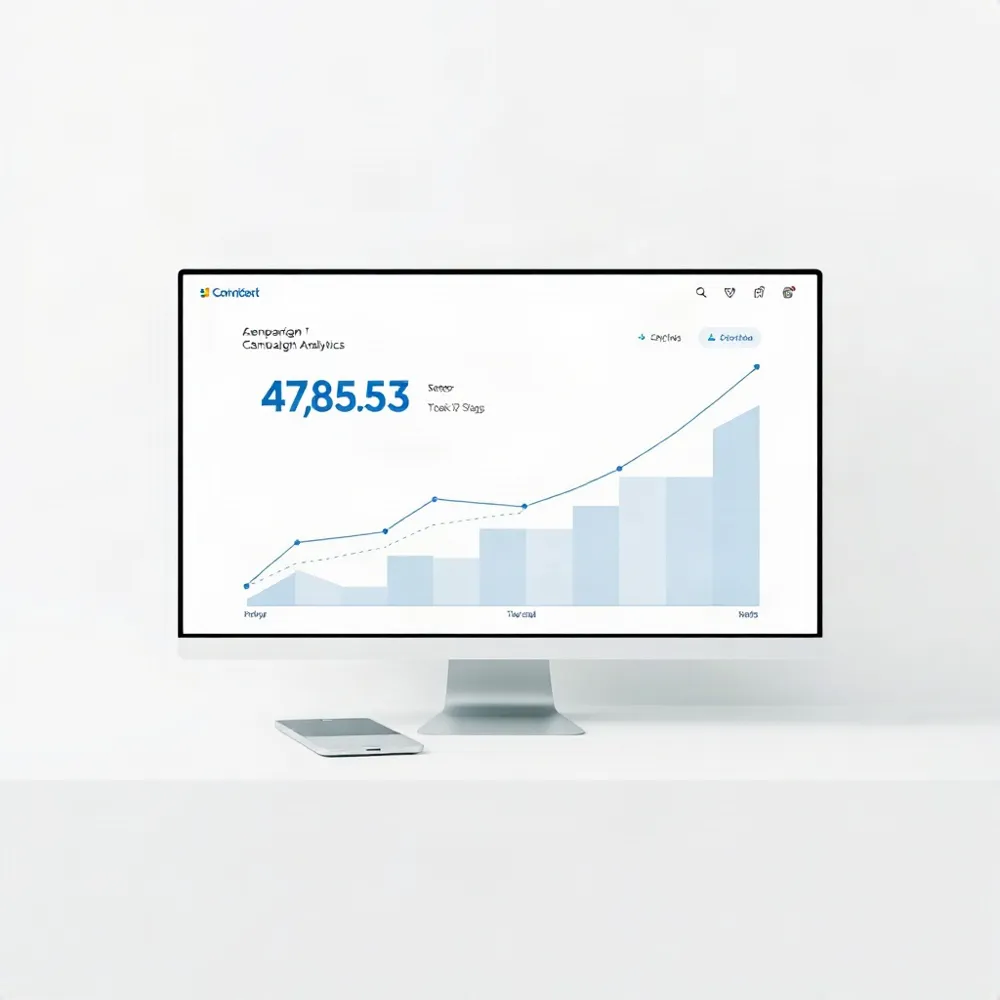
A pilot is only useful if its results answer the question you set out to test. Compare performance with the baseline and success threshold defined before launch, then judge the campaign against its original objective. Digital Consulting Pros’ ROI-focused approach connects campaign activity to qualified sales opportunities, rather than treating a busy dashboard as proof of progress.
Separate activity from business outcomes
Impressions, clicks and email opens show whether people encountered or interacted with a campaign. They do not, by themselves, show whether it generated valuable demand. Pair these activity measures with outcomes such as qualified leads, booked meetings, conversion rate, revenue or cost per acquisition. Choose the measures that fit the goal: a lead-generation test should not be judged mainly by reach, while an awareness campaign needs more than a count of form submissions.
Where possible, connect advertising and email results to CRM records and sales outcomes. Review whether leads met your qualification criteria, how quickly sales followed up, and whether those contacts progressed or became customers. For lead scoring, check whether high-scoring prospects actually convert. If they do not, examine the score’s fit and engagement signals, then adjust the criteria instead of assuming the model is correct.
Test fairly and read the signals
For creative testing, define the variable you are comparing, such as the headline, opening image or call to action, and keep other conditions as consistent as practical. Set an evaluation window suited to the campaign and compare variants on the same measures. A change in clicks may be useful, but also review whether the ad communicates the intended message and represents the brand accurately.
Engagement data can help explain where an asset loses attention. Video analytics, for example, can show where viewers stop watching or drop away, giving the team a reason to reconsider the opening, pacing or message. Google’s campaign example uses audience-retention and video-played-to measures to inform later creative decisions, rather than stopping at the initial asset review of YouTube Analytics. Treat such signals as clues to investigate, not automatic instructions to change a campaign.
Digital Consulting Pros can bring advertising, website, email and lead-generation work into a revenue-focused review, drawing on its services in campaign management, B2B appointment setting and AI-driven lead generation. This helps teams consider the path from first response to sales conversation, not just the performance of one channel.
Turn the report into a next step
A useful report interprets results. Combine platform metrics with CRM or sales information when available, and call out patterns, unexpected changes and plausible explanations. For instance, strong click activity alongside weak lead quality may point to a mismatch between the ad promise and the landing-page offer. Note what the data supports, what remains uncertain and what action you will test next.
Feed those findings into the next brief, audience choice and production plan. If viewers leave early, test a clearer opening; if enquiries arrive but rarely qualify, revisit targeting or the offer. Record the change and its expected effect so the next review can assess it. This closes the loop between measurement and planning, a practical focus also described in AI campaign planning and measurement guidance.
Be careful when attributing a change to AI. Results depend on the audience, data quality, setup, creative and execution, as well as other campaign conditions. A pilot can show what happened in your own context; it does not guarantee the same outcome elsewhere. Keep the evidence, document limitations and expand only when the observed business results justify the next step.
Protect Data and Brand Trust

A campaign can save time and still create risk if customer data is mishandled or an unchecked AI output reaches the public. Before using a service, review its terms for how it collects, stores, and uses submitted information, who can access it, how long it is retained, and what security controls are available. Avoid entering sensitive customer details or trade secrets into a public tool unless your business has assessed the specific use and protections.
For Malta-based campaigns, check that data collection, consent, and processing comply with the GDPR, and confirm that the service fits the campaign’s data-handling needs. A feature being available does not mean its use is lawful or appropriate. Digital Consulting Pros works with SMEs and B2B firms on lead generation, so a responsible workflow should distinguish between information needed to qualify a prospect and sensitive data that should not be passed to an AI system.
Check targeting and scoring
Automated audience selection and lead scoring can reflect gaps or bias in the data used to build them. Review the inputs and criteria against your actual customer profile and business goals, then check whether the results consistently exclude or disadvantage particular groups. Keep the reasoning reviewable, document material changes, and give a person authority to correct a score or pause a campaign when the result looks wrong.
A score should guide attention, not make an unchallengeable decision about a person. Digital Consulting Pros’ buyer-persona approach can help teams define relevant prospect characteristics before using automated prospecting or nurturing, while human review remains available for unusual cases and high-value conversations.
Verify claims and creative
Treat generated copy, research, images, and translations as drafts. Check factual statements against reliable records, confirm that offers and product claims are accurate, and have a fluent reviewer assess localized material for meaning and cultural fit. Review visuals and text for off-brand language, possible intellectual-property issues, and placements that could harm customer trust. Set a clear escalation route for errors, complaints, or questionable content, including who can stop publication.
Do not rely on AI-detection scores as proof that a person did or did not write a piece of content. Detection tools can misclassify human writing, so a score is at most a prompt for further review. Check authorship and accuracy through the work process, source materials, and editorial judgment instead.
Keep accountability with people
Assign a named person to approve each campaign asset and define who handles data questions, scoring concerns, and customer complaints. AI can assist with drafting, analysis, and routine execution, but people remain responsible for strategy, judgment, customer relationships, and final publication. Digital Consulting Pros combines AI-supported lead generation with a results-focused marketing service; that work still depends on human decisions about audience fit, messaging, and follow-up.
A practical review checklist should cover data permission, factual accuracy, brand fit, fairness, localization, and approval status. Keep a record of checks and corrections so your team can identify recurring problems and improve the process. Clear controls protect more than compliance: they help customers trust the messages and decisions they encounter.
Roll Out the Pilot in Stages
A staged pilot gives your team time to test an AI-assisted process before it becomes part of everyday campaign work. Treat the first three months as a practical framework, not a fixed deadline: the pace should reflect the task, available data and staff capacity.
Days 1-30: Find the right starting point
Begin by listing work that consumes significant staff time, such as preparing campaign reports, drafting routine content or qualifying inbound leads. Estimate the effort and business cost, then choose one use case with a clear connection to a campaign objective. A quantified problem gives the pilot a meaningful test, rather than leaving the team to judge success by whether the software feels useful.
Before testing, record the current process as a baseline and set a target, evaluation period and threshold for success. For a reporting pilot, for example, track preparation time and whether the finished report is accurate and useful to campaign decisions. Digital Consulting Pros applies an ROI-focused approach to marketing work, including lead generation and appointment setting, so a pilot can be framed around a business outcome rather than tool activity.
Days 31-60: Compare the assisted workflow
Assess two or three options for the chosen task, checking whether each fits your existing systems, data and team skills. Run the AI-assisted process alongside the current one, using the same brief and inputs wherever possible. Compare the time required, accuracy, usefulness and amount of revision each version needs. Keeping the existing workflow in place during the test makes it easier to spot whether a tool improves the work or simply shifts effort into checking its output.
This parallel test also exposes practical obstacles before you commit. Check whether contact records are complete, campaign steps are documented and connected systems pass information reliably. If the workflow is poorly understood or the data is inconsistent, automation may repeat those problems more quickly instead of fixing them.
Days 61-90: Refine and prepare to expand
If the pilot meets its success threshold, refine the instructions and review checkpoints, then document the process in a short playbook. Include who checks the output, how errors are handled and when a task should return to a person. Give staff hands-on practice with the actual workflow, not just a tool demonstration. Match the time you budget for training to the task and each person’s experience.
Expansion should depend on evidence and readiness. Review data quality, process documentation, integrations, staff capability and whether the use case still addresses a measurable business need. Digital Consulting Pros offers consulting and training alongside its AI-driven lead-generation services, helping businesses connect new workflows with the people and processes responsible for campaign results.
Budget for the full cost of implementation, not just the subscription. Include setup, integration, data preparation, training and ongoing administration, then compare those costs with the measured benefit. Time saved can support more campaign testing, stronger client service or added delivery capacity. It does not have to mean reducing headcount. Expand to another use case only when the first pilot’s results and operating requirements justify it.
Scale Only When Evidence Supports It
A successful pilot is not a reason to automate everything. Expand an AI-assisted workflow only when its results improve on a clear baseline and the work still meets your standards for accuracy, brand quality, data protection and team usability. If the numbers improve but customer trust or output quality falls, the process is not ready to scale.
Compare like with like: use the same audience, campaign objective and evaluation period where practical, then review the business measure the pilot was designed to change. That might be qualified leads, cost per acquisition, conversion rate or staff time spent on a task. Treat the result as evidence about that workflow, not a promise that the same approach will work in every campaign.
The durable advantage comes from combining clean data, clear instructions, connected processes and human judgment. More tools do not automatically mean better campaigns. Digital Consulting Pros brings these elements together through services that span website development, advertising, email marketing, content and AI-driven lead generation, with work directed toward measurable sales opportunities.
For the next step, choose one campaign bottleneck and write down how you will judge improvement before changing the process. Run a limited test, review both results and quality, then decide whether to refine the workflow, keep it as it is or stop. Digital Consulting Pros also offers consulting and training, which can help teams build practical skills while keeping decisions grounded in their own campaign data.
When a pilot falls short, use the findings to identify what needs attention: data quality, targeting, instructions, review steps or handoffs between systems. A focused adjustment gives the next test a clear purpose. Scale only when the evidence supports the change and your team can manage it consistently.