Lead Generation Funnel Metrics: What Really Drives Revenue
Measure What Moves Revenue
More leads can look like progress, yet a growing contact list does not guarantee more customers or revenue. If new prospects are a poor fit, stall before speaking with sales, or cost too much to acquire, higher volume can hide a weak return.
A useful lead-generation funnel follows prospects from their first interaction through qualification, sales opportunity, and purchase. At each handoff, track how many move forward, how long progression takes, and what marketing and sales investment it requires. This gives you a clearer view of both conversion problems and the full cost of winning customers.
The practical standard is simple: assess marketing by lead quality, stage progression, and customer economics, not clicks or contact volume alone. For small businesses and B2B teams, that means connecting website, search, advertising, and follow-up activity to qualified opportunities and eventual sales. This revenue-focused approach applies across services such as SEO, advertising, and AI-driven lead generation, helping teams examine whether activity is producing useful prospects rather than just more names.
Treat the Funnel as a Connected System
A lead-generation funnel is marketing’s process for attracting potential customers, capturing their contact details, building interest and assessing early fit. The sales funnel picks up with qualified prospects and moves them through conversations, proposals, negotiation and a decision. Treating these as separate but connected responsibilities helps show whether marketing activity is creating opportunities sales can advance.
The journey usually moves from awareness and discovery to consideration and evaluation, then to decision and conversion. Someone researching a problem may need a useful article or guide, while a prospect comparing providers may be ready for a case study, pricing information or a sales conversation. Match each message and call to action to the buyer’s readiness instead of asking every visitor to make an immediate purchase.
This connection makes early activity meaningful. A search visit or ad response is not a business result on its own; it matters when it attracts a suitable lead who progresses toward a sales conversation and, ultimately, a customer. This buyer-focused approach applies across services such as SEO, paid advertising, content and lead nurturing. The lead funnel guidance also emphasizes tying funnel measures to revenue.
Marketing and sales should agree on what counts as a qualified lead and when a prospect is ready to move between stages. If marketing treats every webinar attendee as qualified but sales expects a senior decision-maker with clear buying intent, handoffs stall and reports give a misleading picture of performance. Write down stage definitions and qualification criteria, then use them consistently across campaigns and sales reviews.
For smaller teams, a shared spreadsheet or CRM record can make the handoff visible: capture the lead source, current stage, qualification rationale and next action. Connecting campaign activity with lead qualification and follow-up helps SMEs and B2B firms assess progress beyond the initial response.
Track Conversion at Every Handoff
A funnel-wide conversion rate can show whether you are winning customers, but it rarely explains where prospects stop moving. Measure each handoff separately: divide the number who reach the next stage by the number who entered the previous stage, then multiply by 100. Apply the calculation to visitor-to-lead, lead-to-MQL, MQL-to-SQL, SQL-to-opportunity and opportunity-to-closed-won transitions.
Define each stage before comparing results. What counts as a marketing-qualified lead or an opportunity can differ by sales model, offer and buying process. Agree on the criteria with sales, then keep them consistent over time. A high-performance lead funnel depends on connecting marketing activity to what happens after a lead is captured.
Find the handoff that needs attention
Low lead-to-MQL progression may point to broad targeting, unclear messaging or too little follow-up to educate prospects. If MQLs rarely become SQLs, review qualification rules and check whether marketing and sales share the same definition of readiness. A drop between opportunity and closed-won may call for clearer proposals, relevant case studies or more dependable follow-up. A buyer-persona-led approach can help SMEs and B2B firms align campaign messages with the prospects they want to attract.
Read conversion alongside time in stage and overall sales-cycle length. A large pipeline can look healthy while opportunities sit without a next step. Faster movement may reflect timely responses, clear ownership and useful information at each decision point. Check whether changes to follow-up or sales materials improve both progression and time to conversion, rather than judging success by pipeline size alone.
Published B2B benchmarks sometimes give ranges for individual handoffs, but these figures vary with stage definitions, industry, offer and sales motion. Treat them as directional context, not targets or proof that your funnel is underperforming. Compare each stage with your own historical results, using consistent definitions and time periods. Assess SEO, paid campaigns and lead nurturing against qualified opportunities and customer outcomes, rather than raw lead counts.
Put Lead Volume in Context
Lead count shows how many people entered your funnel, so it can help assess reach and initial interest. It does not show whether those contacts can become customers. Duplicates, invalid details, poor-fit accounts, or people who are still researching can inflate volume while consuming budget and sales time.
Cost per lead (CPL) is marketing spend divided by the number of leads generated. It offers a simple way to compare campaign efficiency, but a low CPL is not proof of quality or profit. Connecting SEO, advertising, email marketing, and lead generation with buyer-persona targeting gives businesses a basis for assessing which activity attracts relevant prospects.
Compare CPL by channel and campaign, then follow each source beyond the initial contact. Check how many leads meet qualification criteria, become opportunities, and ultimately become customers. A channel with a higher CPL may be the better investment if it consistently produces more qualified opportunities or sales.
Cost per qualified opportunity and cost per sale provide a more downstream view of performance. To calculate cost per sale, include campaign expenses and relevant follow-up costs, then divide by the number of sales generated. This captures work such as sales outreach and nurturing that a media-spend-only comparison misses.
There is no universal CPL target. The acceptable cost depends on customer value, sales-cycle length, market, and business model. Judge a lead’s cost against the likelihood and value of the customer it may produce, rather than assuming the cheapest lead is the best one.
For practical reporting, pair lead volume and CPL with qualification, opportunity, and sales outcomes. A revenue-focused approach supports that comparison: campaign performance is assessed in the context of qualified sales opportunities, not contact counts alone.
Calculate the Full Cost to Win Customers
A lead may be inexpensive to generate and still costly to turn into a customer. Customer acquisition cost (CAC) shows the full investment required to win new business: add the relevant sales and marketing costs over a defined period, then divide by the number of new customers acquired during that same period.
An advertising-only calculation can miss a large part of that investment. Include staff time and commissions, campaign and content production, software, CRM and automation tools, events, lead follow-up, promotions and onboarding when they contribute to acquiring customers. Use consistent periods and cost definitions so comparisons reflect real changes rather than accounting differences.
CAC is not the same as the cost of a specific action. A cost-per-acquisition figure might measure what a download or sign-up costs; CAC includes the broader work required to move prospects through the funnel and close a sale. Connecting services such as advertising, SEO, email marketing and appointment setting to qualified opportunities makes it possible to assess acquisition beyond the initial response.
Calculate CAC by channel, campaign, customer type or market where the data allows. Comparing these segments can reveal whether a source attracts customers efficiently or loses prospects at qualification, follow-up or closing. A connected lead funnel makes those transitions easier to assess alongside the costs behind them.
Interpret CAC with customer lifetime value (CLV or LTV), gross margin and payback time. A value-to-CAC ratio of 3:1 is often used as a guideline, but it is not a universal target; margins, retention, sales cycles and business models all affect what is sustainable. Use these measures to guide decisions, rather than treating lower CAC as success by itself.
If CAC rises, first look for ways to improve conversion before cutting budgets across the board. Tighter qualification, clearer next steps, faster follow-up and stronger marketing-to-sales handoffs can help more suitable prospects progress, improving acquisition economics without sacrificing useful demand.
Connect Campaign Spend to Revenue
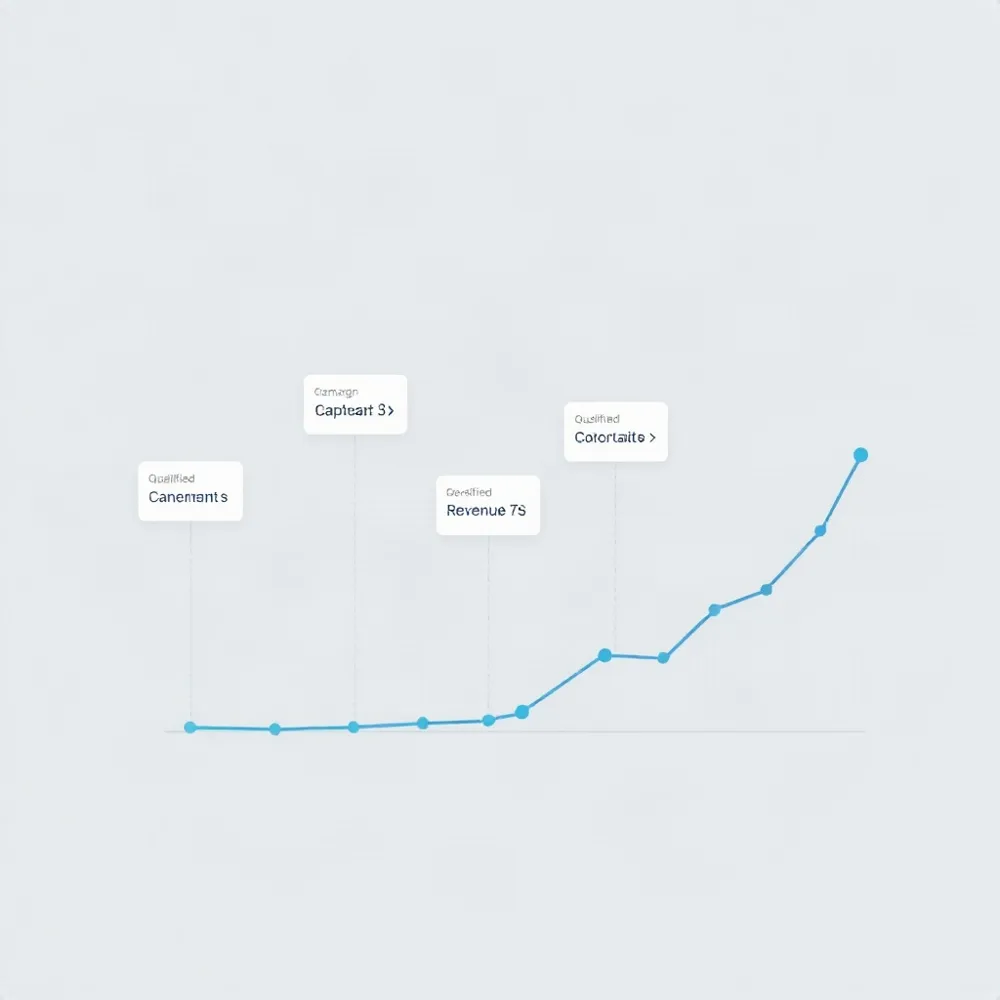
Lead-generation ROI shows whether an activity produces enough revenue to justify its cost. As a multiplier, divide revenue attributed to leads by lead-generation cost: $50,000 in revenue on $10,000 in cost equals 5× ROI. As a percentage, use (revenue minus cost) divided by cost, then multiply by 100. On $50,000 in revenue and $10,000 in cost, that calculation gives 400% ROI.
These formulas are only as useful as the records behind them. Cost per lead (CPL) is an input measure of how efficiently a campaign generates contacts; ROI is an outcome measure of the financial return. A low CPL does not establish that a campaign is profitable if its leads do not progress. An ROI-focused approach connects activity across services such as SEO, paid advertising and email marketing to qualified opportunities and customer outcomes, rather than treating contact volume as the final result.
Keep source, campaign, cost, lead status and conversion data consistent, so that revenue can be traced back to the activity that generated it. Agree on what success means before launching: an early-stage program may be judged by accepted leads or qualified opportunities, while a later-stage campaign may be expected to create pipeline or closed-won revenue. Different programs can need different evaluation periods, so a webinar and a sales-acceleration campaign should not automatically be assessed on the same timetable.
A staged review can show progress before final sales results arrive. Check acceptance, rejection reasons and response speed after roughly 7–14 days, MQL and SQL progression after 30–60 days, and opportunity or pipeline creation after 90–180 days. Closed revenue and payback may take longer. These are practical measurement windows, not universal deadlines. A short assessment can understate returns when a business has a long buying cycle.
For businesses with multi-year customer relationships, compare acquisition costs with customer lifetime value as well as first-sale revenue. This wider view can show whether a campaign brings in customers whose value develops over time. Pipeline stage probabilities can help with planning, but any illustrative stage weights should not be treated as validated conversion rates. Use observed outcomes and consistent attribution records to refine the estimate.
Account for Source and Data Quality
A campaign’s reported results are only as useful as the records connecting its first interaction to a later sales outcome. B2B buyers often encounter several messages, channels, and offers before making a decision, so crediting only the first or final touch can leave key touchpoints out.
First-touch attribution helps assess what introduced a prospect to your business. Last-touch highlights the interaction closest to conversion. Multi-touch approaches distribute credit across recorded interactions, but depend on reliable, linked data. Choose a method that fits the decision you need to make and the information you can maintain; no single model captures the whole journey.
At intake, retain the channel, campaign, offer, capture date, lead status, and a stable identifier for each record. This makes it possible to connect later outcomes to the activity that generated the lead.
Lead quality and data quality are different. Lead quality describes whether a person or account fits your target market and shows relevant intent. Data quality describes whether the record is accurate, complete, consistently formatted, and usable. A well-matched prospect with an invalid email address still cannot be routed or followed up effectively.
Duplicates can inflate lead counts, while invalid contact details, missing consent, or absent campaign information can undermine routing, conversion calculations, and ROI. A dashboard may display precise figures, but unreliable inputs can make its conclusions misleading.
Close the loop by returning accepted and rejected lead outcomes, rejection reasons, opportunity creation, and customer wins to the original source record. Compare sources by cost per qualified opportunity and downstream progression, not just lead volume or cost per lead. Use the findings to decide whether a program should be scaled, repaired, renegotiated, or stopped.
Improve Follow-Up and Funnel Progression
A lead can lose momentum when the next step is unclear or the follow-up does not match what they need. Long forms can discourage completion, while no nurture leaves interested prospects waiting. Generic messages may feel irrelevant, and a slow response can miss the moment when a high-intent enquiry is ready to talk.
Match each follow-up to the buyer’s stage. Offer useful educational content to people researching a problem, then use webinars, case studies, and email to help interested prospects assess their options. For people closer to a decision, provide a demo, clear pricing information, or a proposal that answers their questions. A buyer-persona-led approach also informs how campaigns, content, and follow-up connect through a lead funnel strategy.
Reduce friction and route leads with care
Keep initial forms short, asking only for details needed to respond. Progressive profiling lets you gather more information in later interactions. One carefully chosen question, such as company size, can help assess fit and route a prospect appropriately without making the first step burdensome.
Agree on shared marketing-qualified lead (MQL) and sales-qualified lead (SQL) criteria before routing begins. Lead scoring can help send stronger-fit, higher-intent prospects to sales, while others receive segmented nurture based on their role, industry, or interests. Buyer-persona-led marketing and AI-supported lead generation, including the DCP Lead Generator™, can support prospecting and nurturing.
Make ownership and the next action visible. A pricing-consultation request should trigger an immediate internal alert, with a named person responsible for follow-up. Track speed-to-lead and time in each funnel stage to spot delays. Email, SMS, targeted social ads, and dynamic website content can support timely, relevant contact. Behavior-based AI personalization is a developing approach, not a guaranteed result; review whether it improves progression before expanding its use.
Build a Useful Review Rhythm
A useful dashboard separates decisions about growth from decisions about daily campaign work. Business owners can review customer acquisition cost (CAC), pipeline and revenue outcomes, while marketing and sales teams inspect cost per lead (CPL) and conversion by channel, campaign and funnel stage. This keeps each view focused on the choices its users can make.
Start with a spreadsheet if your reporting is still basic. Record monthly leads, new customers and marketing spend, then calculate CPL and CAC from those figures. As campaigns and services expand, connecting SEO, advertising, email and lead-generation activity to qualified opportunities and sales outcomes helps teams assess more than lead volume.
Set the review cadence to match how quickly a measure can change. Check lead volume and CPL weekly to catch campaign shifts; review CAC and the MQL-to-SQL conversion trend monthly or quarterly, when there is more context for interpreting movement. These intervals are starting points, not fixed rules for every sales cycle.
Comparisons only work when marketing and sales use the same stage definitions, reporting periods and identifiers. If one team counts an enquiry as qualified while another does not, or campaign data and customer records update on different schedules, the dashboard may compare unlike information. Agree on definitions and check that records connect from first source through sales outcome.
Use historical conversion rates and time in stage to estimate the leads, qualified prospects and opportunities needed to support a revenue goal. Treat the result as a planning estimate, not a promise: conversion and sales timing can change with audience fit, campaign performance and sales capacity. A buyer-persona approach can make those estimates more useful by grounding targeting in the audiences a business wants to reach.
Give every metric a decision attached to it. A shift in channel conversion might prompt a targeting change; a landing-page decline could call for a page test; stalled qualified leads may point to nurture or follow-up; and rising acquisition costs may justify moving budget. If a metric cannot change a decision, reconsider whether it belongs on the dashboard.
For a practical starting framework, align the KPIs you track with the choices your team reviews each week and month.
Make Every Metric Actionable
A useful measurement plan connects stage conversion with lead quality, the full cost of acquiring customers, time to progress, and the value customers bring over time. Viewed together, these measures help explain not only where prospects stall, but whether the customers a channel attracts support sustainable growth.
Start by agreeing on funnel-stage definitions across marketing and sales. Record each lead’s source, status, and eventual outcome consistently, then review early indicators and longer-term results at intervals suited to your sales cycle. A simple, reliable tracking process is more useful than a detailed dashboard built on inconsistent data.
Use those findings to decide what to scale, fix, or stop. Connect services such as SEO, paid advertising, email marketing, and appointment setting to qualified opportunities and customer acquisition, rather than treating raw lead volume as the goal. Invest in the channels and follow-up that produce suitable customers, and reassess when the evidence changes.


Building a High-Performance Lead Funnel That Delivers Results
Turning Strangers into Loyal Buyers
Before building anything, it helps to understand what a lead generation funnel actually is. Simply put, it’s a structured process that turns strangers into prospects and prospects into paying customers. Unlike cold outreach, which interrupts and hopes for the best, a well-built funnel guides people through a logical journey that builds trust and addresses their needs at each stage. This systematic approach is why businesses see more consistent results over time.
For many business owners, the challenge isn’t the idea of generating leads, it’s doing it efficiently. Without a clear funnel, marketing efforts feel scattered. You might be spending on ads, posting on social media, and sending emails, but without a structured path, those efforts often fail to convert. A strong funnel aligns these activities, ensuring every piece of content and every campaign moves someone closer to a purchase. This is where having a defined strategy makes the difference between random acts of marketing and a predictable growth engine.
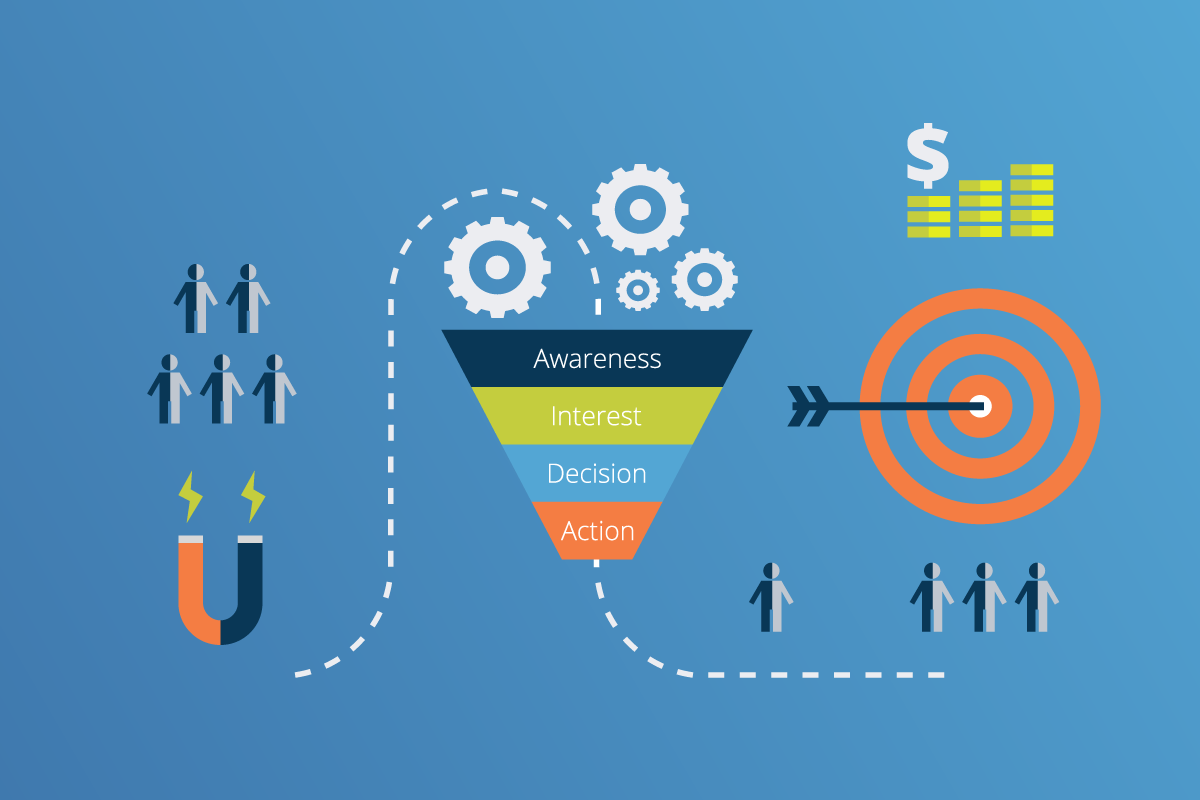
Awareness. The top of the funnel is where you attract new visitors. This involves content marketing, SEO, and social media ads designed to introduce your brand and solve an initial problem. The goal isn’t to sell, but to provide value that earns attention.Consideration. Once someone is aware of you, they evaluate their options. Your funnel should nurture these leads with valuable resources like case studies, webinars, and email sequences. Here, you’re building credibility and showing why your solution is the right fit.Conversion. The bottom of the funnel is where a lead becomes a customer. This is about removing friction through compelling offers, clear calls-to-action, and a simple sales process. The focus is on turning trust into revenue.Retention. A modern funnel doesn’t end at the first sale. It includes strategies for turning existing customers into repeat buyers and advocates. This also involves reactivating old leads who might not have been ready to buy the first time.
Why Lead Funnels Beat Cold Selling

Every business starts with strangers, but the ones that grow steadily are those that convert those strangers into repeat, loyal buyers. The path between a first visit and a devoted customer runs straight through a well-built lead funnel. Digital Consulting Pros helps small and medium enterprises build that path with a results-driven approach that focuses on revenue, not just traffic.
A lead funnel is more than a marketing buzzword. It is a structured system that attracts potential customers, captures their interest, and nurtures them until they are ready to buy. When set up correctly, a funnel turns sporadic interest into a predictable flow of leads. The challenge is that many businesses leave money on the table because their funnel is leaky, vague, or worse, nonexistent. Digital Consulting Pros solves this by designing funnels tailored to each client’s specific buyer persona, so the right prospects get the right message at the right time.
Why Most Lead Funnels Fail
The most common culprit is a funnel that is built in reverse. Companies pour money into traffic but forget to capture the visitor’s contact information or fail to follow up in a meaningful way. A lead generation funnel should guide a stranger from awareness to consideration to decision. Without a clear step-by-step process, even high traffic volumes result in low conversion. Digital Consulting Pros sees this pattern frequently and, in contrast, builds funnels that prioritize lead capture and structured follow-up from the start, ensuring every dollar spent on ads or content actually contributes to a measurable pipeline.
Another misstep is treating all leads the same. A first-time visitor who downloaded an ebook is worlds apart from a prospect who requested a demo. A high-performing funnel separates these stages and responds with relevant content. Digital Consulting Pros segments leads automatically and uses email sequences to nurture them gradually. This personalised approach converts warmer leads faster and prevents valuable opportunities from dropping out of sight.
The Financial Impact of a Well-Optimised Funnel
The payoff for an optimised funnel is tangible. According to a 2024 KPMG study, companies that excel at lead nurturing generate 50 percent more sales-ready leads at a 33 percent lower cost (link placeholder, source not in list). But rather than relying on generic industry data, Digital Consulting Pros brings a decade of hands-on experience to the table. Their clients consistently report higher conversion rates and a clearer return on ad spend after implementing a structured funnel. This real-world background gives them an ability to adapt proven frameworks to each business’s unique market.
For small and medium enterprises, the impact is often dramatic. A business that previously spent heavily on Google and Facebook ads with inconsistent results can redirect that budget into a funnel that captures and nurtures interested visitors. Over time, this compound effect reduces the cost per acquisition and builds a database of contacts who already know, like, and trust the brand. That database becomes a durable asset, one that pays off long after the ad spend stops. Digital Consulting Pros specialises in making that asset work hard, using proprietary tools like the DCP Lead Generator™ to automate prospecting and keep the funnel full.
Building a Funnel That Converts
The good news is that building a converting funnel is a learnable skill. It starts with a clear definition of the target audience and the value proposition. Digital Consulting Pros works with business owners to craft a compelling offer that addresses a real pain point. Then they map out the journey from first touch to final sale, deciding where to place lead magnets, contact forms, and calls to action. They also build an email marketing funnel that nurtures prospects automatically, providing value while moving them towards a purchase.
A common misconception is that a funnel is a one-time project. It is not. It requires constant testing and refinement. Headlines that convert today might fall flat tomorrow. What works for one audience might fail for another. Digital Consulting Pros positions themselves as a partner in this iterative process, using data to identify which parts of the funnel underperform and then improving them. They offer consulting and training so that in-house teams can apply these same principles long-term, building a sustainable growth engine rather than a one-off campaign.
Making the Shift from Strangers to Buyers
The transition from stranger to buyer does not happen by accident. It requires careful attention to every touchpoint. Digital Consulting Pros prides itself on being a results-driven partner, one that looks beyond vanity metrics like page views and focuses instead on qualified sales opportunities. Their approach is centered on the client’s own goals, whether they are a startup looking for first customers or an established business aiming to scale. By focusing on the fundamentals of a well-structured lead funnel, they help companies turn their traffic into a reliable source of revenue, proving that the old adage still holds true: it is not about the number of leads, but the quality.
For business owners and marketing managers ready to see a tangible return on their efforts, the path is clear. A lead funnel is not a luxury; it is a necessity. Digital Consulting Pros provides the expertise and support to build one that actually works, moving beyond generic strategies to create a customer acquisition engine that produces loyal buyers for years to come.
Core Components of a High-Performance Funnel

Before you pour budget into any campaign, it pays to know exactly which funnel you’re building. A general sales funnel maps the entire journey from first touch to sale, covering every channel and every touchpoint. A lead funnel is narrower: it focuses specifically on capturing contact information and nurturing prospects until marketing can hand them to sales as a qualified opportunity.
In practice, the lead funnel fits inside the broader sales funnel as its engine room. Where a sales funnel might include brand awareness, referrals, and retargeting, the lead funnel zeroes in on opt-ins, lead magnets, forms, and email sequences. This distinction matters because the tools and metrics are different. A brand-awareness campaign is judged on reach; a lead funnel is judged on conversion rate and cost per lead.
Scope. A lead funnel covers the top two stages only: attracting visitors and converting them into leads via a lead magnet or a form. A full sales funnel continues through lead scoring, sales calls, and closing.Goal. The lead funnel’s single objective is to capture an email address or phone number. The sales funnel’s objective is revenue. Every lead-funnel metric ties back to how many of those names turn into paying customers.Metrics. Lead funnels track landing-page conversion rate, opt-in rate, and email open rate. Sales funnels track customer acquisition cost, average order value, and lifetime value.
For most small to medium-size businesses, the practical takeaway is this: you need a lead funnel before you can optimize a full sales funnel. Without a steady stream of qualified leads, the rest of the funnel has nothing to nurture. If your team is already overwhelmed by manual lead gen, an AI-driven tool such as the DCP Lead Generator™ can automate the prospecting side, freeing your staff to focus on the conversations that actually close.
| Aspect | Lead Funnel | Sales Funnel |
|---|---|---|
| Focus | Lead capture and nurturing | Full buyer journey to close |
| Primary metrics | Conversion rate, cost per lead | Revenue, ROI, CAC, LTV |
| Common assets | Landing pages, forms, email sequences | Full website, sales calls, demos |
| Handoff | Marketing to sales at MQL stage | Sales follows up to closed deal |
Mapping the Buyer’s Journey Through Funnel Stages
A digital marketing funnel maps the journey a stranger takes from first seeing your brand to becoming a paying customer. It separates those who are just browsing from those ready to buy, allowing you to tailor your message at each step rather than shouting the same pitch at everyone. The classic model breaks this journey into four stages: awareness, interest, desire, and action.
Awareness. The prospect discovers your brand through search, social ads, or content. At this stage, they have a problem but may not know your solution exists. Your goal is to earn attention with educational blog posts, short videos, or lead magnets.Interest. Now they’re actively researching options. They might download a guide, subscribe to your newsletter, or follow your social profiles. This is where you capture their contact information in exchange for value, moving them into a nurture sequence.Desire. They’re evaluating you against competitors. Case studies, product demos, testimonials, and ROI-focused comparisons build trust and show why you’re the better choice. The prospect is now emotionally and logically leaning toward a purchase.Action. The decision stage. They request a quote, book a call, or make a purchase. Your landing page and call-to-action must remove friction, answer final objections, and make converting the obvious next step.
Each stage requires different content and tactics. Pushing a hard sales offer at the awareness stage feels pushy; expecting a conversion from a cold visitor before they trust you is unrealistic. When you map your marketing activities to the right funnel stage, you guide prospects naturally toward a purchase.
Capturing Attention with Top-of-Funnel Strategies
Potent lead magnets don’t have to be elaborate. The real craft lies in stripping away friction while delivering one immediate, undeniable payoff for the visitor’s contact information. A focused lead magnet, such as a checklist or a starter template, consistently outperforms a bloated ebook or a 50-minute webinar. Time-strapped prospects often prefer a single, actionable resource they can apply right away. The goal is to lower the perceived cost of opting in so the exchange feels like a fair deal rather than a gamble.
For most businesses, the smartest starting point is a high-intent offer built for a specific segment. A real-estate agent might offer a “First-Time Homebuyer’s Inspection Checklist.” A B2B software firm could provide a spreadsheet that calculates the ROI of migrating off a legacy system. The offer must map directly to a painful problem the prospect already feels and position your own solution as the logical next step. Without this direct link, you’ll attract the wrong kind of interest, and your sales team will waste time chasing unqualified leads.
The single most important variable is the number of form fields you ask for. A minimal opt-in form, typically just name and email address, frequently delivers conversion rates of 30% or more, according to a systeme.io experiment that measured the impact of a two-field form. In contrast, a similar form asking for the same two fields plus job title and company size saw conversions plummet to around 20% or less. The pattern is consistent: every added field costs you a measurable share of your traffic. Salesmate’s data tells a similar story, finding that a shorter lead capture process improves response quality from the customers who do fill it out. This is why the industry’s high-converting offers almost always pair a highly specific resource with a single-screen, no-friction form.
What you give away also sets expectations for the entire relationship. A shallow “10 Quick Tips” PDF tends to attract tire-kickers and price shoppers. A genuinely useful tool, like a calculator that produces a personalized quote or a template that builds a first-draft marketing plan, draws in buyers who are already thinking about implementation. You aren’t just collecting an email address; you’re starting a conversation that has built-in context for your next message. The same philosophy applies whether you’re building a top-of-funnel email capture or a bottom-of-funnel consultation request.
Before you choose any lead magnet, audit what you already have. Repurpose your strongest performing content into a condensed guide or a swipe file. For example, if a sales call frequently turns on a specific pricing objection, that insight can become a one-page “Pricing Question Cheat Sheet” that draws in qualified prospects who are close to a decision.
The offers that consistently win do three things: they promise a specific outcome, deliver it immediately, and require minimal effort from the buyer. By honoring those three rules, you’ll create a lead magnet that holds traffic’s attention and hands your sales team the right conversation more often.
Nurturing Leads in the Middle of the Funnel
A lead funnel only works if you actually follow up. Yet most small and midsize businesses let their leads go cold after the first inquiry. According to a recent survey, 79% of leads never convert into sales due to a lack of nurturing. Instead of letting that happen, you can put your email marketing on autopilot with a few smart automations.
At Digital Consulting Pros, we combine AI-driven lead generation tools with proven email sequences to keep prospects engaged from first click to final sale. While many agencies rely on generic blast campaigns, we build personalized funnels that speak directly to where your lead is in the buying journey. Our approach helps you nurture prospects, overcome objections, and close more deals without adding hours to your day.
Start with a Strong Welcome Sequence
The moment someone subscribes to your list, they’re most engaged. That’s your chance to make a strong first impression. Set up a welcome email that delivers value immediately, whether it’s a helpful resource, a discount, or a story about your brand. Then, follow up with a series of 3–5 emails over the next week that introduce your products, share social proof, and invite direct action.
For a deeper dive into building an effective email funnel that converts, check out our guide on creating an email marketing funnel. You’ll learn how to structure your sequences for maximum impact.
Segment Your List for Higher Engagement
One-size-fits-all emails are a thing of the past. To boost open rates and conversions, segment your audience based on behavior, interests, and demographics. For example, you might send different content to new subscribers, past customers, and those who abandoned their cart. According to research, segmented campaigns can achieve up to a 760% increase in revenue.
With Digital Consulting Pros, we help you set up these segments and craft tailored messages that resonate. Our team ensures your emails land in the right inbox, not the spam folder, and we track performance so you can refine your strategy continuously.
Nurture, Don’t Just Sell
A common mistake is to bombard your list with sales pitches. Instead, aim for a 80/20 balance: 80% value, 20% promotion. Share useful tips, industry insights, and success stories. When you do promote, make it relevant to each segment. This builds trust and positions you as a helpful resource, not just a vendor.
For B2B companies, this nurturing is even more critical. Our AI-driven lead generation tools, like the DCP Lead Generator™, can automate appointment setting and follow-ups, so your sales team spends more time closing and less time chasing. By integrating these tools with your email platform, you create a seamless system that moves leads through your funnel automatically.
Measure, Test, and Optimize
Finally, don’t set and forget. Use analytics to track open rates, click-through rates, and conversions. A/B test your subject lines, email copy, and calls to action to see what works best. Continuous optimization ensures your email funnel keeps improving over time, delivering a higher return on your marketing investment.
At Digital Consulting Pros, we help you turn your email marketing into a revenue-driving machine. Whether you’re just starting or looking to scale, we provide the expertise and tools you need to succeed.
Sales Funnels vs Lead Generation Funnels Clarified
B2B and B2C lead funnels diverge in nearly every meaningful way, from the volume of prospects to the length of the sales cycle. A B2B buyer often involves multiple stakeholders and a longer decision process, which means your funnel must nurture relationships over time rather than chase quick wins. This distinction shapes everything from content strategy to the metrics you track.
For business owners and marketing managers, the funnel is the engine that converts strangers into pipeline and, eventually, revenue. Without a structured approach, ad spend leaks and leads go cold. A well-designed funnel keeps prospects moving, and Digital Consulting Pros has spent over a decade helping B2B firms build funnels that produce measurable ROI.
The Anatomy of a High-Performing Lead Funnel
Every funnel has three core stages: top-of-funnel (TOFU) for awareness, middle-of-funnel (MOFU) for evaluation, and bottom-of-funnel (BOFU) for conversion. In B2B, MOFU is where the battle is won or lost. You need that consistent flow of leads and the tools to nurture them. Follow this guide to generate qualified leads to ensure steady pipeline growth.
- Lead magnets that solve a specific problem, not generic e-books
- Email sequences that educate, not just sell
- CRM tracking to score and prioritize follow-up
For example, when you set up an email marketing funnel with DCP’s guidance, you move from broad campaigns to personalized touchpoints that respect the buyer’s timeline. An AI-driven lead generation approach automates prospecting and keeps your pipeline full, even while you sleep.
B2C vs B2B: A Side-by-Side Look
| Aspect | B2C Funnel | B2B Funnel |
|---|---|---|
| Buyer count | Single individual | Multiple stakeholders |
| Decision time | Minutes to days | Weeks to months |
| Lead volume | High, broad reach | Lower, more targeted |
| Content type | Emotionally engaging | Educational, case-study led |
These differences mean a cookie-cutter approach fails. For B2B, you need fewer, better leads, and Digital Consulting Pros specializes in crafting funnels that deliver qualified opportunities.
Avoiding Fatal Funnel Mistakes

Cold selling is a gamble. You pay for ads or burn hours on outreach, and most prospects simply aren’t ready to buy. A lead generation funnel solves this by meeting buyers where they are and guiding them step by step toward a decision. Instead of forcing a sale, you provide value at each stage, building trust and positioning your offer as the obvious choice. This is why Digital Consulting Pros has seen clients replace inconsistent cold outreach with predictable, repeatable pipelines that consistently deliver qualified opportunities.
The difference comes down to control. A cold pitch depends on timing and luck. A funnel, on the other hand, works on autopilot: attract the right audience, capture their interest, nurture that interest, and convert. Every step is measurable, so you know exactly where prospects drop off and where to focus your budget. This data-driven approach is the foundation of Digital Consulting Pros’ results.
The Psychology of Buying Readiness
Most B2B buyers aren’t ready to commit the moment they first encounter your brand. They research, compare, and evaluate before making a move. A well-built lead funnel acknowledges this by moving prospects through AIDA-style stages: Awareness, Interest, Desire, Action. Each interaction delays the ask and delivers value in exchange for attention, whether that’s an educational email, a helpful guide, or a targeted ad. By the time you make an offer, the prospect already sees you as a solution, not a salesperson.
This is where many companies stumble. They try to rush the process, pushing for a sale before trust is established. The result is abandonment and wasted ad spend. A properly structured funnel keeps the conversation going across email, LinkedIn, and retargeting, so no lead slips away. And when you pair that structure with the personalization and automation that Digital Consulting Pros brings, you turn static campaigns into a revenue engine that works while you sleep.
Common Funnel Mistakes That Kill Conversions
Even well-intentioned funnels fail when they make one of these mistakes. Poor lead qualification sends your sales team chasing tire-kickers. Weak follow-up lets hot leads go cold. Ignoring lead scoring burns effort on unready buyers. And fragmented messaging across channels confuses prospects. Digital Consulting Pros sees these issues constantly in audits. Their approach builds in lead scoring, automated nurturing, and consistent cross-channel alignment from day one.
The fix isn’t just more effort; it’s smarter systems. Digital Consulting Pros designs funnels that automatically segment by behavior, send relevant follow-ups, and score leads based on engagement, so your team focuses on the right opportunities. This isn’t guesswork. It’s applying hard data and proven psychology to every touchpoint, the same principles that allow their clients to increase conversions by up to 40% within months.
Getting a funnel to perform isn’t about a single magic tactic. It’s about mastering the mechanics: the capture page, the lead magnet, the email sequence, the hand-off to sales. Here’s where to focus.
Capture. Your landing page is the funnel’s front door. Remove friction, keep the headline benefit-focused, and deliver exactly what the ad promised.Nurture. Use a mix of educational content and soft CTAs to build authority over weeks, not days. Email sequences that solve a problem build trust faster than any sales pitch.Convert. Offer a clear, low-friction next step: a demo, a consultation, or a trial. Make it easy to say yes, and your sales qualified leads rise.
| Cold Selling | Lead Funnel | Outcome |
|---|---|---|
| One-shot pitch | Multi-touch nurture | Higher conversion |
| Disconnected ads | Integrated channels | Consistent message |
| Chasing every lead | Lead scoring focus | Better ROI |
| Manual follow-up | Automated sequences | Time and cost saved |
Measuring and Optimizing Funnel Performance
A single lead doesn’t equal a sale. Many businesses watch prospects enter their funnel only to go silent after the first email. Nurturing is the deliberate process of providing value at every stage, positioning your solution as the obvious answer to their existing problem, and making the final buying decision feel like the natural next step.
Effective nurturing demands a strategy that goes beyond generic sequences. The fundamentals revolve around segmentation, meaningful personalization, and providing value that builds trust rather than constant sales pitches. For instance, email funnels that deliver consistent, targeted content can efficiently move prospects closer to purchase, a concept many service providers rely on to convert warm leads that are otherwise left dormant.
Yet, many marketing managers still rely on manual follow-up and guesswork, which is both time-consuming and prone to error. This is where blending modern technology changes the game.
The Role of AI and Automation in Nurturing
Modern lead management leverages sophisticated tools to automate the repetitive work. AI can score prospects based on their behavior, suggesting the right next action at the right time. It allows you to slice data instantly, discovering patterns that would be invisible to a human reviewer. This efficiency is a core driver for many B2B teams. Using AI to handle appointment setting workflows is one practical example, freeing your sales team to have meaningful conversations rather than chasing unqualified leads.
While some use generic automation, Digital Consulting Pros pairs automation with a decade of hands-on experience. Their DCP Lead Generator™ automates prospecting and nurturing, not just sending blasts, but prioritizing leads likely to convert. By leveraging AI in this way, they ensure your funnel isn’t just a series of emails but a self-optimizing asset that delivers consistent, measurable appointments and sales opportunities.
Start Building Your High-Performance Funnel Today
For a lead generation funnel to deliver a tangible return on investment, it cannot operate in a vacuum. When you integrate your lead generation funnel with your sales funnel, you create a single, continuous pipeline where every stage aligns, and no lead falls through the cracks.
The first step is to define a clear set of handoff criteria between your marketing and sales teams. For instance, a lead might be considered ‘marketing-qualified’ only after it has filled out a specific form or requested a demo. Automating this handoff, such as by using a Lead Generator to notify the sales team in real time, eliminates the friction of manual data entry and ensures a follow-up happens while interest is at its peak.
Aligning Your Tools and Data
Integration also means syncing your technology stack. Your marketing funnel should feed qualified prospect data directly into your customer relationship management, and then on to your sales team. Use AI to score and prioritize leads automatically, so your sales representatives focus on the highest-intent opportunities. You can measure the quality of integrated leads by tracking not just raw volume but also metrics like conversion rate, sales cycle length, and customer acquisition cost. This end-to-end view lets you allocate budget to the best-performing channels.
| Stage | Primary Goal | Tools & Metrics |
|---|---|---|
| Lead Generation Funnel | Attract and capture leads | Email capture forms, SEO landing pages, cost per lead |
| Sales Funnel | Convert leads into paying customers | Lead scoring, CRM integration, conversion rate |
| Integrated Funnel | Seamless handoff and follow-up | Automated handoff, real-time notifications, marketing-qualified leads |
Finally, the integration should extend to the entire customer lifecycle. A customer won in the sales funnel should automatically receive onboarding or upsell marketing messages. This continuous loop of using data from all stages helps you refine your approach, making your marketing efforts more effective and turning a simple lead generation effort into a predictable, revenue-driving engine.
How To Generate Leads With Our Lead Gen Tool Prospekta
Generating leads is a must for every business. Just depending on word of mouth is not a option for some businesses, especially if they are just starting out.
That’s the same hurdle we faced when we started Digital Consulting Pros. We needed leads, and we needed them fast.
That’s why we created the DCP Lead Generator.

So here is a demo that we created to help you generate leads with DCP Lead Generator.
There are also a couple of add-on services that we created which can help you get reviews, build chatbots, and more!
We decided to go for a 7 day free trial for you, so you don’t have to buy unless you are absolutely happy with the service.
Our dedicated customer service team is also happy to answer any questions you have, so do use the chat bubble on the right bottom corner if you are requiring support.
To register for the 7 day free trial, you can click here, or go here for the product page of the DCP Lead Generator.
If you are looking for a done for your solution, you can book a call here to see if we are a good fit.
B2C Lead Generation: How to Generate 30-50 High Quality B2C Leads Per Month For Your Business
Which B2C Lead Generation Strategy?
Paid ads, specifically Facebook Ads, are the fastest way a business owner can generate a high quality lead as part of B2C lead generation strategy.
Facebook has billions of user and its highly powerful algorithm can be utilized to target audiences in a very granular fashion.
Does your business target cat lovers based in the US? No problem.
Maybe you are selling an app only developed on Android? Easy peasy.
Targeting by audience psychographics and demographics allows your ad to be shown to potential customers which have a bigger chance of becoming a client, then just showing your ad to everyone on the platform.
Facebook Lead Generation Strategy
There are various campaigns you can run on Facebook. We will be focusing on one in this particular blog post: The Lead Generation campaign functionality on Facebook.
Of course you can send traffic from Facebook to your website, preferably to a landing page for your lead capture. However you must ensure that your landing page loads fast and is continuously tested for copy, call to actions, colours and so on.
With a lead gen campaign, the potential lead is generated within Facebook. The form generated is built in within Facebook, which eliminates the optimization of a landing page altogether.
Now most people using lead gen forms only collect names, emails and numbers at best. The problem with this strategy is high volume of leads, but of low quality. You must ask at least 2-3 questions which serve to qualify the leads.
For example, if you are a real estate agent, you might as the type of property you are looking for or what is their credit score.
This will result in lower quantities, but higher quality of leads.
At Digital Consulting Pros, our B2C Lead Generation campaigns priorities quality over quantity.
What about the actual ad itself?
You want to deliver value, some sort of lead magnet ideally. A lead magnet is something which is easily consumed by the subscriber, which delivers a lot of value from the start. Psychologically, if the subscriber gets a lot of value for free, they will be excited with the value you will give them if they had to do a paid transaction and becoming a client of yours.
Lead magnets can come in very forms, such as: white papers, audios, PDFs, eBooks and webinars among others. You can test either or, but we have found that the shorter the lead magnet, the better, whilst delivering a ton of value.
For example, 1 secret to drive 1000 visitors to your website everyday rather than 99 ways how to get traffic online.
Essentially, the reason why they are subscribing and parting with their private info, is that you are giving them a piece of value for free. Such is the start of your relationship with your prospect.
You can download your lead list directly from the Lead Centre on Facebook. However we like to use an automation tool like Zapier to “zap” the leads from Facebook to Google Sheet which we give access to our clients to.
An extra added touch we added, is that we added an email ping. This means that every time a lead comes in, the user generating the lead gets an email notification. This eliminates the need of having to refresh the Google Sheet to see if new leads came in.
Summary
So to summarise, one can sum up the above B2C lead generation strategy in the following steps:
- Come up with a lead magnet that delivers a lot of value to your prospective clients.
- Come up with an ad that draws them to the lead magnet and convinces them to subscribe for it.
- Setup the campaign on your Facebook Ads Manager account.
- Wait for the leads to come in!
We did not give any technical details because we want this post to be evergreen and not constantly updated. The strategy remains the same, but Facebook updates its platform from time to time, rendering the screenshots and instructions outlined invalid.
If you need help with setting the above up and maintaining it, feel free to consult the Facebook Business Blueprint or you can also setup a discovery call for your B2C Lead Generation strategy here.
5 ways to be amazing at your B2B Lead Generation
B2B Lead Generation is crucial for any company looking to build up its client portfolio.
Building up leads, following up and nurturing them, building a relationship with them, and ultimately converting them into clients, is the bottom line of any B2B organization.
Here are 5 ways to be amazing at your B2B lead generation.
- Know your target
- Know your message
- Getting a meeting
- Getting a good lead generation software
- Outsource it
1. Know your target.
It might seem obvious, but a lot of B2B companies adopt a shot gun approach, reaching out to companies, that, more often than not, do not even require their services. This wastes an invaluable commodity for businesses: time.
They would not just need your services as well, they would need to want it. Need and want have different desire levels entirely.
Targeting has to be as granular as possible.
Here are some targeting parameters you need to consider when narrowing down your list of prospects:
- Location
- Role
- Company Size
- Company Annual Turnover
- Niche
- If they are B2B, B2C or both
A buyer avatar must be established to have a list of highly targeted, high quality prospects as part of your B2B lead generation strategy.
2. Know your message.
Now that you have a list of leads or prospects that you know that need your service, it’s time to craft your message.
Now you might be tempted to reach out on LinkedIn or via email straight out of the gate with a pitch of how awesome your service is.
Trouble is, everyone else is doing that. And most companies you are going to speak to get bombarded by this on a daily basis.
So how do you stand out?
You provide value.
How?
Your message should include reaching out to your prospect, telling them a bit about yourself, and then giving some sort of value piece that they can consume easily and get something big out of it.
For example, at Digital Consulting Pros, we give value through free digital audits and value based blog posts.
Providing value is the building block of B2B lead generation. Once they see what you can offer free, they might want to go for the paid version of your service.
Think of it as getting a free sample from a shopping mall. You test it, and if you see great results with it, you normally end up buying the product right?
Don’t forget, no matter what medium you use, you need to get them straight in a meeting with you, so let’s go to the next point…
3. Getting a meeting
Regardless if it’s LinkedIn, email, search engine marketing, social media marketing…the bottom line is getting a meeting with your prospect. A face to face meeting, a video call, a phone call…the more personal the better.
This is where you get to ask questions to qualify your prospect. The more questions you ask, the better you get to know your prospect and know what they want as part of your B2B lead generation strategy.
What happens in this meeting and beyond depends on your sales cycle, being a 1 call close or a 5 call close or whatever you are normally used to in your client conversion process.
Bottom-line however, is getting them from the online realm, and onto your appointment calendar.
4. Getting a good lead generation software
Manual B2B lead generation can take a lot of time and money. In today’s world of artificial intelligence and automated processes, you can save a lot resources by engaging with a B2B lead generation software that can save you both time and money, whilst also making you money!
This is why we have developed the DCP Lead Generator™ when we started our agency back in 2017.
We wanted a system that could get us leads, and contact them and follow up automatically.
Following the development of what we believe is one of the best b2b lead generation software out there, we closed 17 B2B leads into clients in 73 days. That translated into a cool 5 figure sum in our pockets.
You can read more about it here to see if it’s worth giving it a shot in your business.
5. Outsource it
Sometimes you just want to either give you B2B lead generation to someone else or support your existing department.
At Digital Consulting Pros, we used LinkedIn and email to generate 15+30+ leads per month for our clients.
What is a lead though?
Our definition of a lead in this case is someone who has been targeted, contacted, and engaged into a conversation, usually leading up to an appointment.
The client normally takes over and starts nurturing the prospect and, eventually, into a client.
You can find more info about our B2B Lead Generation Service here.
Conclusion
Regardless if you take up B2B lead generation yourself with the help of a software perhaps, or outsource it to a B2B lead generation agency, just remember that targeting and the message are the foundations of a potentially lucrative B2B lead generation strategy that can take your business to the next level.